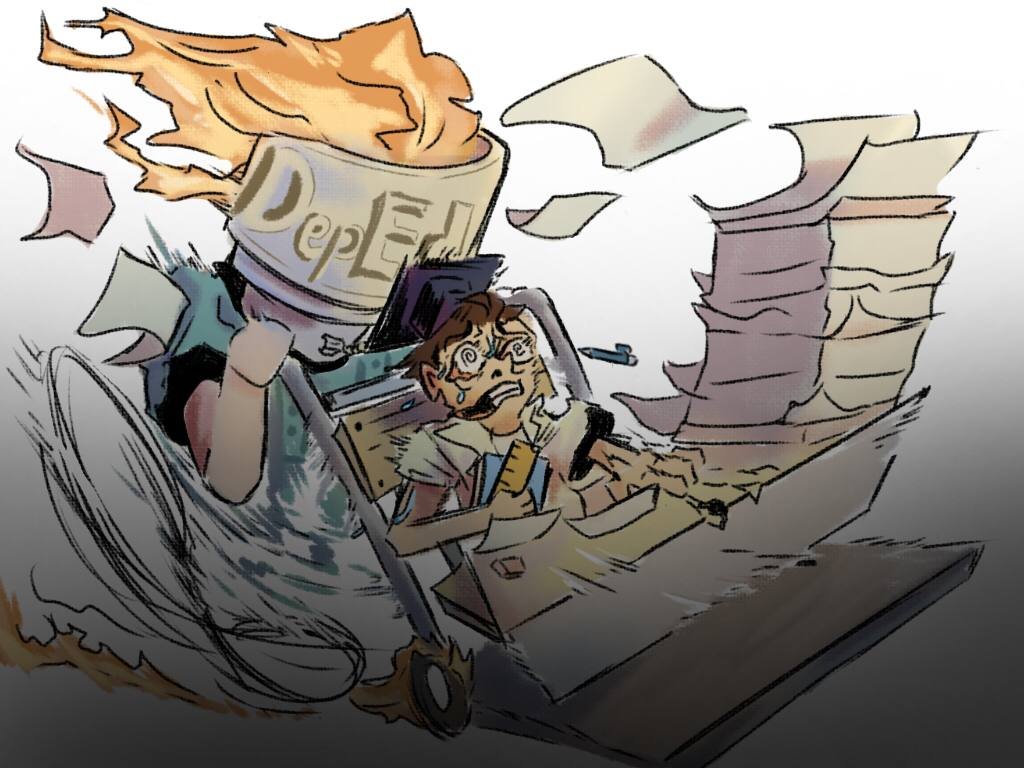
The Department of Education has unveiled a new Senior High School (SHS) curriculum, an initiative that promises to streamline learning, enhance relevance, and respond to the evolving demands of education in the 21st century. On paper, it sounds promising. But for those of us living within the system, the announcement stirs not just curiosity but uncertainty.
While curriculum development is essential to national progress, this newly introduced framework enters a system still adjusting to the foundational elements of the K–12 program. With students and educators still acclimating to the current strand-based model, the abruptness of this reform raises concerns. Major educational shifts, if not implemented carefully and inclusively, risk disorienting those they are meant to serve.
The uncertainty is not rooted in resistance to change but in the historical patterns of rushed implementation. Previous reforms, however well-intentioned, have often been hampered by a lack of preparation, insufficient teacher training, limited resources, and inadequate dissemination of information. The fear is that this new curriculum may follow the same trajectory: idealistic in theory, but unstable in practice.
Yet despite the fear, we do not slam the door on reform. Change is necessary. The world is evolving, and education must evolve with it. Perhaps this new curriculum will address long-standing gaps, reduce content overload, and offer learners more focused, relevant skills. But reforms without careful implementation are just experiments, with students as test subjects.
While apprehensions persist, rejection is not the solution. Instead, what is required is critical engagement. Learners, educators, and stakeholders must remain involved in the discourse, ensuring that the transition is transparent, inclusive, and evidence-based.
Thus, DepEd owes it to every Filipino learner to ensure that this curriculum is more than just another cycle of trial and error. It must be a promise fulfilled—a curriculum that listens, adapts, and delivers.
We are ready to walk into change, but only if the system walks with us.